AR smart glasses · 2013 · Google
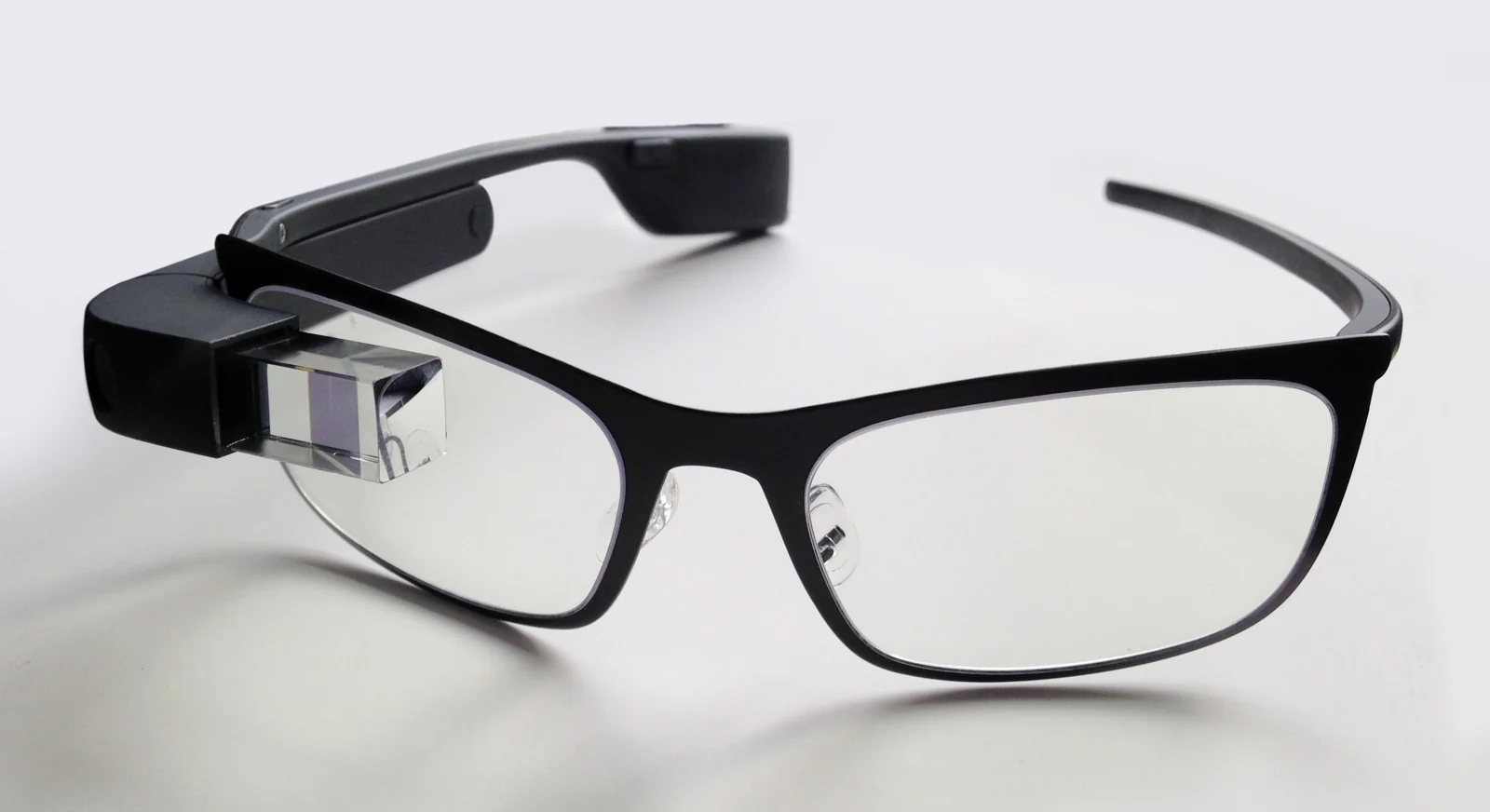
Google Glass (Explorer Edition)
Good design · Sells poorly
AI-evaluated · 7 of 9 criteria could be judged
From 1 sourced signal
Smart glasses released in 2013 for developers and tech enthusiasts, with design led by industrial designer Isabelle Olsson. A minimal titanium frame carries a prism microdisplay in front of the right eye, with voice, touch and head-movement controls for photos, video and information.
Design, scored.
- Form Quality66
Built on established eyeglass geometry, the form is clean and restrained, with thin straight frame members, curved temples and a clear intent. The right-eye prism module is an add-on protrusion, so the whole reads as glasses plus a module.
Confidence 40%
- Proportion62
The wide, shallow eyeglass proportion suits a worn product, but visual weight shifts to the front right because the display covers one eye only. With no dimensions available, the precision of the proportions cannot be judged.
Confidence 30%
- Color / Material / Finish—
Not evaluable: only material cues are known (titanium frame, optical prism display element); color scheme, surface finish and texture are all undocumented, so the coherence and finish of the CMF cannot be judged.
- Function Integration62
The prism display sits exposed at the front of the frame, a recognition point rather than a hidden part. It still reads as an add-on, and whether the sensors, microphone and touch surface are housed in the frame is unclear.
Confidence 30%
- Ergonomics—
Not evaluable: beyond resting on the nose and ears like glasses, nothing is known about the nose pads, hinges, weight, control placement or the display's position relative to the eye, so long-wear comfort and reach cannot be judged.
- Innovation85
It moves the display from bulky headsets onto an ordinary eyeglass frame, pairing a single-eye prism display with voice, touch and head-movement input. Aiming for everyday wearability is an exemplary attempt in the category, and the combination is clearly original.
Confidence 50%
- Brand Identity68
Minimal geometric hardware with a single functional module as the recognition point forms a restrained, internally consistent hardware language. Without color, finish and detail information, it cannot be confirmed that this language carries through the whole product.
Confidence 30%
- Emotional Appeal65
The thin titanium frame feels light, restrained and everyday, while the clear prism adds a futuristic note; together they express technology hidden in an everyday object. Without color and finish, the finer emotional register cannot be confirmed.
Confidence 30%
- Visual Clarity72
The outline reads at a glance as glasses, with thin members and a single focal point, the front-right display, so the hierarchy is clear. That protrusion breaks the outline and creates asymmetry, so it reads as both glasses and device.
Confidence 30%
Market, sourced.
- Units soldOver 10,000 units
“Users paid $1,500 for each pair of Glass and Google reportedly sold more than 10,000 pairs.”
computerworld.com — Google tries to reset Glass embarrassment with cooler wearable – Computerworld ↗
Collected 2026-10-10 · Confidence 60%
Where it sits among the cases
Design scores are AI-evaluated from photos and descriptions; each of the nine criteria is scored 0–100, and a criterion with too little evidence is left unscored rather than guessed.
A market number is kept only when the quoted sentence appears on the source page and the number appears in the quote. Design awards never count.
Exported from the KMSWERK research library on October 12, 2026. Facts are pending a human review before this page goes public.